Fox Shamrock Font: Versatile Display Typography for Web Design
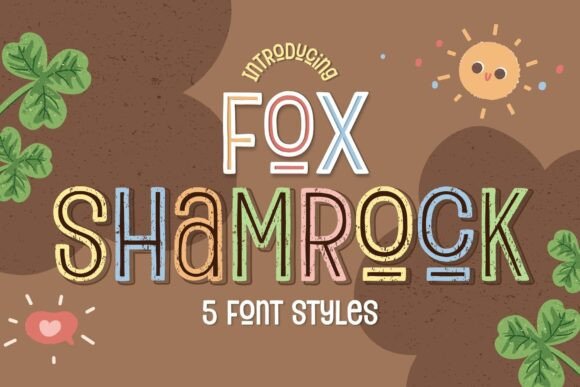
Creating a distinct visual identity on the web requires more than just selecting a legible typeface; it demands a font system that can adapt to various content blocks while maintaining brand consistency. Fox Shamrock is a display font collection that addresses this specific challenge for digital product creators and UI designers. Unlike single-weight novelty fonts, this typeface offers five distinct styles—Regular, Rust, Inline, Line, and Outline—that function as a cohesive design system rather than isolated decorative elements. For web designers building landing pages, e-commerce stores, or creative portfolios, this versatility allows for complex visual hierarchies without leaving the Adobe or Figma environment to source mismatched assets.
Establishing Visual Hierarchy with Five Distinct Styles
The primary struggle in modern web design is guiding user attention through scanning behavior. Users rarely read every word; they scan headers, buttons, and highlighted text to determine relevance. Fox Shamrock supports this behavior by providing built-in variation. The Regular style serves as a solid anchor for primary headlines, offering enough weight to command attention in hero sections without overwhelming the viewport. When designing secondary sections or feature grids, switching to the Inline or Line styles creates an immediate visual distinction that signals a shift in content importance. This reduces cognitive load because the typography itself communicates structure.
For conversion-focused layouts, the Rust and Outline styles act as powerful tools for emphasis. In A/B testing landing pages, changing a call-to-action button or a value proposition from a standard sans serif to the textured Rust style of Fox Shamrock can significantly alter perceived value and engagement. The texture adds a tactile quality that flat digital screens often lack, making promotional banners or limited-time offer sections feel more organic and less corporate. This is particularly effective for boutique online stores, coaching websites, or artisanal brands where personality drives trust as much as professionalism does.
Practical Applications Across Digital Touchpoints
Digital product creators need assets that perform across multiple screen sizes and contexts. Fox Shamrock excels in environments where space is at a premium but impact is non-negotiable. Consider the following applications for web and UI projects:
- Hero Sections: Use the Regular or Rust styles for large-scale introductory text. The unique character shapes prevent the "wall of text" fatigue common with generic geometric sans serifs.
- Navigation and Badges: The Outline and Line styles are ideal for navigation pills, category tags, or sale badges. Their lighter visual weight ensures they remain readable at smaller sizes without competing with primary navigation links.
- Social Media Integration: Maintain brand consistency by using the same font family for embedded Instagram feeds, Pinterest graphics, and YouTube thumbnails featured on your site.
- Editorial Content: For blogs or magazines, use Fox Shamrock for pull quotes and drop caps to break up long-form body copy and improve reading rhythm.
- App Onboarding: The playful yet structured nature of the typeface works well for welcome screens and feature highlights in mobile applications, setting a friendly tone before users engage with functional UI elements.
Readability and Responsive Layout Considerations
While Fox Shamrock is undeniably a creative font, its utility depends entirely on responsible implementation. As a display typeface, it is engineered for short bursts of text, not extended reading. Pairing it correctly is essential for accessibility and user experience. For body copy, captions, and interface labels, always pair Fox Shamrock with a highly legible neutral sans serif or a clean serif font. This contrast ensures that while the headings provide flavor, the functional content remains accessible to all users, including those with visual impairments.
Responsive design introduces specific challenges for decorative typography. The intricate details in the Rust and Inline styles may degrade on low-resolution mobile screens or when scaled down below 24px. When implementing this font in CSS, establish clear breakpoints. You might use the detailed Rust style for desktop hero headers but switch to the cleaner Regular or Outline style for mobile viewports to preserve legibility. Additionally, consider line-height and letter-spacing adjustments; display fonts often require tighter tracking at large sizes but may need increased spacing when used in all-caps button labels to prevent characters from visually merging.
Color, Contrast, and Dark Mode Implementation
The interaction between Fox Shamrock and background colors dictates its success in UI design. High-contrast combinations are mandatory for WCAG compliance. The Rust style, with its inherent texture, can sometimes reduce perceived contrast against mid-tone backgrounds. Test rigorously against both light and dark themes. On dark backgrounds, the Outline and Line styles can create a sophisticated neon or retro-futuristic aesthetic, provided the stroke width remains visible. Avoid placing textured styles over busy photography without a sufficient overlay or gradient, as the noise in the image will compete with the noise in the font, rendering the text illegible.
Building Brand Identity Through Typographic Consistency
A strong digital brand relies on repetition. Using five different fonts across a website creates a disjointed experience that erodes trust. Fox Shamrock allows designers to introduce variety while staying within a single typographic DNA. This is invaluable for SaaS founders and creative entrepreneurs who need their marketing site, course platform, and email newsletters to feel like part of the same ecosystem. By rotating through the five styles based on context rather than mood, you create a predictable visual language that users subconsciously learn to navigate.
This consistency extends beyond the website to downloadable assets and digital products. If you are selling templates, planners, or social media kits, including Fox Shamrock (with appropriate licensing) adds significant perceived value. It transforms a generic template into a branded asset. For logo design and wordmarks, the Regular and Rust styles offer enough character to stand alone without additional iconography, while the Outline style works exceptionally well for monograms or watermark overlays on digital content.
Licensing and Technical Specifications for Web Projects
Before integrating Fox Shamrock into a live production environment, verify the technical and legal requirements. Ensure the license covers webfont usage (@font-face) specifically, as desktop licenses do not always include server-hosted file permissions. Check for multilingual support if your project targets international audiences; missing glyphs can force browsers to fall back to system fonts, breaking the design integrity. Confirm that the file formats include WOFF2 for optimal loading performance, as display fonts can be heavier than standard text fonts due to their complex vector paths.
When specifying this font in design handoffs or style guides, document exactly which style corresponds to which HTML tag or component class. Define rules such as "H1 uses Fox Shamrock Rust," "H2 uses Fox Shamrock Regular," and "Badges use Fox Shamrock Outline." This prevents developer guesswork and ensures the final coded product matches the high-fidelity mockups. By treating Fox Shamrock as a systematic tool rather than mere decoration, web designers can leverage its full potential to create digital experiences that are visually engaging, structurally sound, and commercially effective.